
The equals sign, a fundamental feature of mathematics and something we’re all familiar with. However, it wasn’t always this way. Prior to its creation, a word or phrase usually signified that an answer to a calculation was about to be revealed. This was time consuming, particularly when multiple calculations had to be conducted, for instance in coastal towns and shipping villages where accurate record keeping of imported and exported goods had to be kept. This was likely the case where a man named Robert Recorde was born.
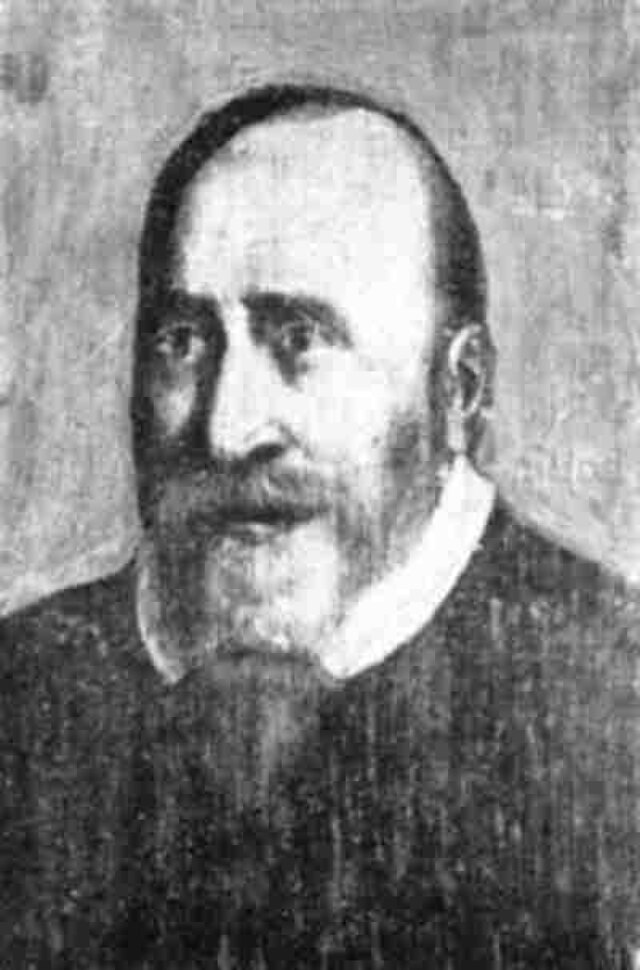
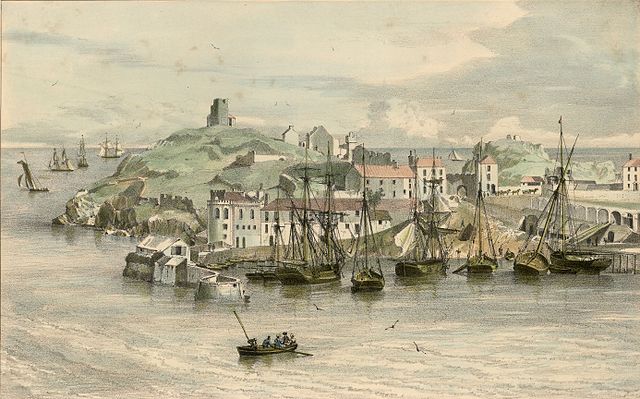
Robert Recorde was born in 1510 in the West Wales coastal town of Tenby. He studied Mathematics at Oxford gaining his degree before studying Medicine at Cambridge. This led to a role as court physician to the ill-fated only son of King Henry VIII, King Edward VI, before conducting the same role for Queen Mary I. Recorde also wrote various books on anatomy and was financial controller at the Royal Mint in Bristol and a surveyor at Mines and Monies in Ireland.
However, its Recorde’s contributions to mathematics that have definitively stood the course of time. Unlike other authors at the time who wrote in Latin, Recorde wrote in English in a style that mimicked communication between a teacher and a student, a style that persists in various educational resources that allow for independent learning to this day.
His first book on mathematics, titled ‘The Ground of Artes’, introduced basic arithmetic, including information on how to effectively use an abacus. This was followed by texts on geometry and astronomy, before his final, and believed to be his most influential work, ‘The Whetstone of Witte’, was published in 1557. It is within this publication that algebra was introduced to Britain and in doing so the equals sign was first used. Two parallel lines of equal length that never touched which signified that what was to follow was equal to what preceded. Recorde himself said: “No two things can be more equal.”
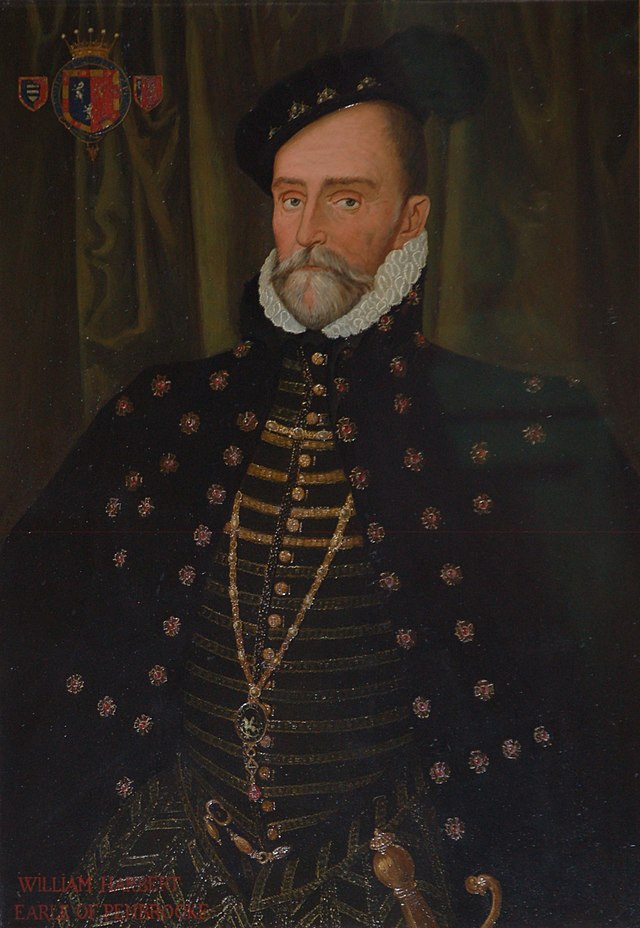
Unfortunately, Recorde did not live to see his equals sign become widely used. After finding himself in libellous action against William Herbert, the 1st Earl of Pembroke, Recorde was fined £1000 (equivalent to approximately half a million pounds today). Either due being unable to pay the fine or perhaps refusing to do so, Recorde was imprisoned in Kings Bench Prison in Southwark, London, where he died in 1558.
It was not until approximately the 1700s that Recorde’s equal sign, albeit with shorter lines than the original, began to be widely used for multiple applications, as it continues to be today.
So, the next time you write down a calculation or an equation, whether it’s simple arithmetic or advanced calculus, give a little nod to the mathematician from Tenby, who saved you a little time with his equals sign.

 Science and Joe