Human rhinoviruses, from the Picornaviridae (Picornavirus) family, cause approximately 50% of cases of the common cold. There are over 150 serotypes of rhinovirus across three species: HRV-A, HRV-B and HRV-C.
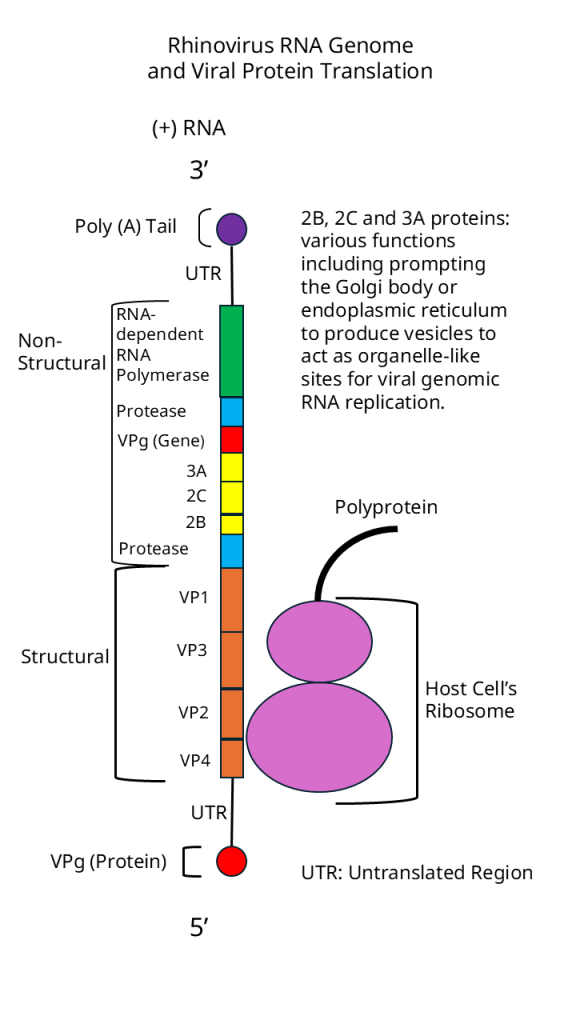
As a member of Group IV in the Baltimore classification system, rhinoviruses have a genome composed of a single linear sense or positive RNA strand, meaning it can function as mRNA and be directly translated for protein synthesis. Rhinoviruses achieve this by using the ribosomes of host human cells to translate the structural and non-structural proteins it requires to produce new viral particles (known as virions). Non-structural proteins include viral proteases which cleave a translated polypeptide chain (a polyprotein) into individual mature proteins, and RNA-dependent RNA polymerase (RNA replicase) which facilitates genomic replication.
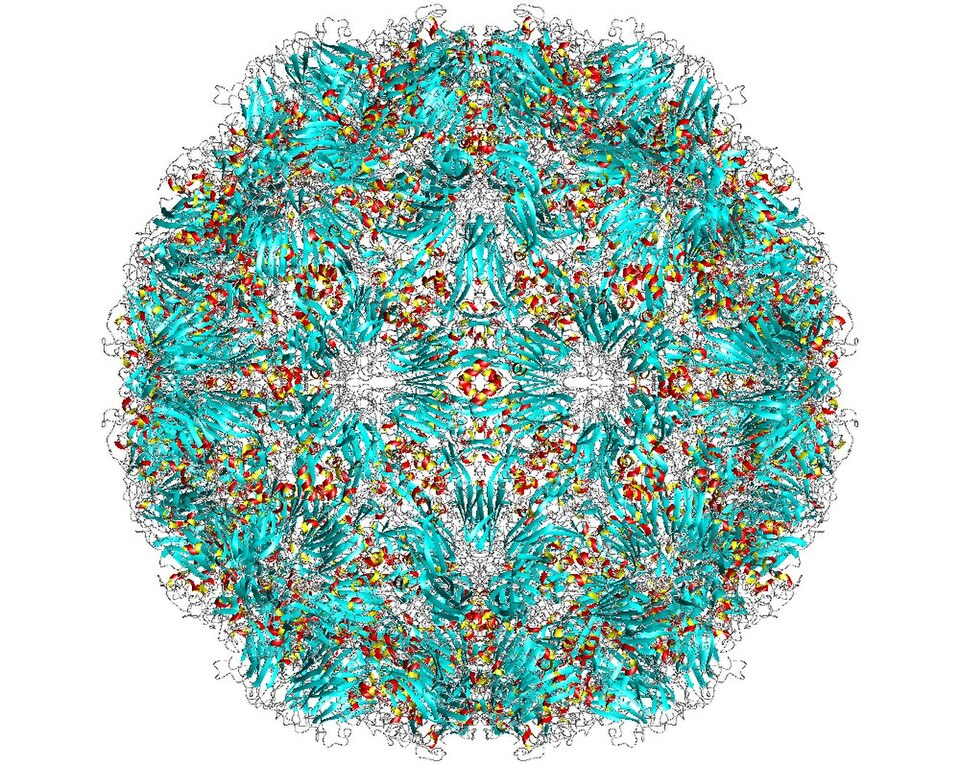
The structural proteins compose the viral capsid, a protein-based shell that surrounds and protects the RNA genome. The capsid has an icosahedral symmetry and is non-enveloped meaning there is no lipid-based additional layer exterior to the capsid that some other viruses, such as influenza, gain from the cell membrane of a host cell.
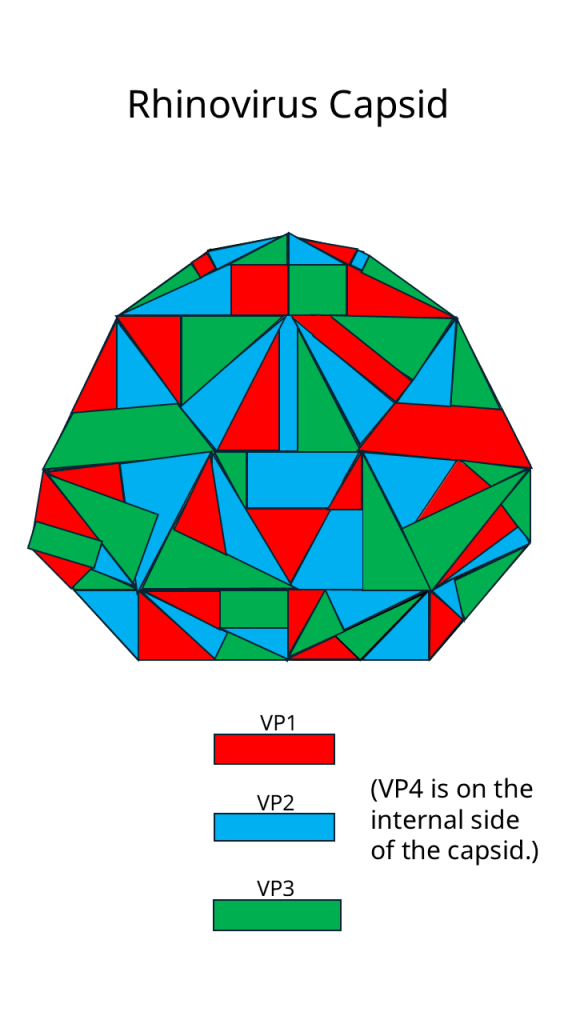
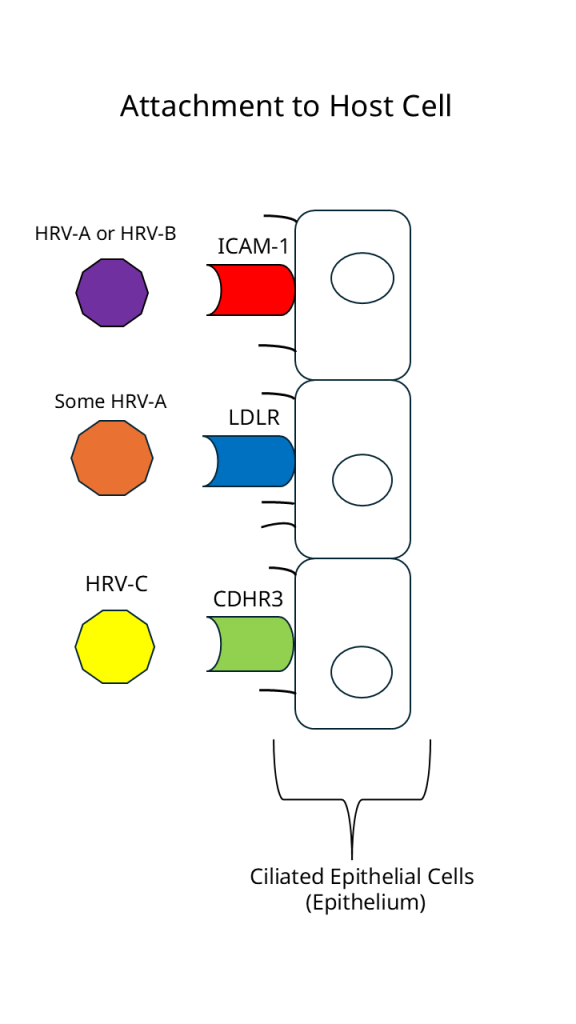
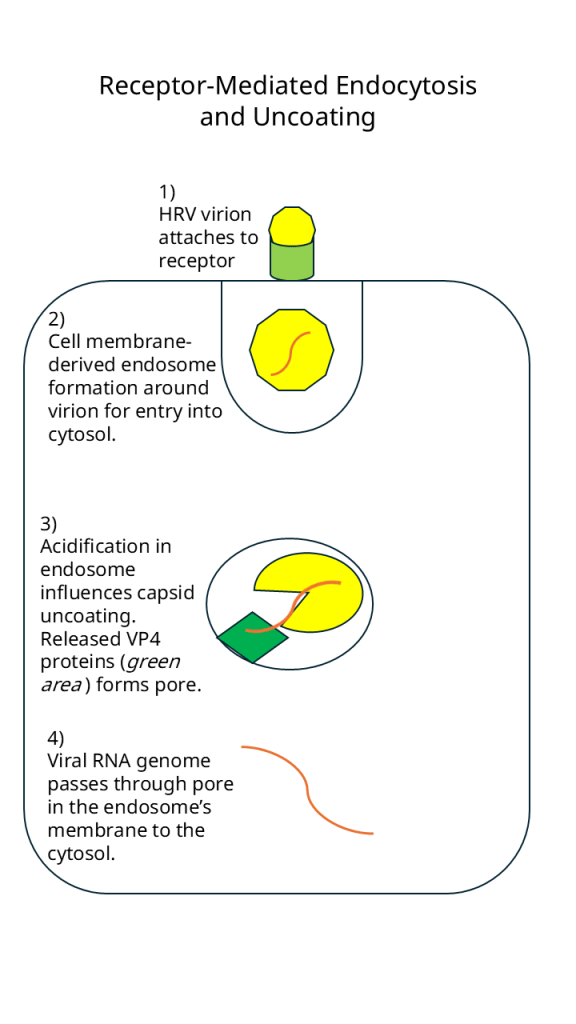
The capsid of each virion consists of 60 subunits termed capsomers, each containing copies of the four main structural proteins: VP1, VP2 and VP3, which are on the surface of the capsid, and VP4 which is on the internal side. The genome and capsid can be collectively referred to as the nucleocapsid. VP1 is the main facilitator of attachment and entry into human cells. Most HRV-A and all HRV-B serotypes bind VP1 to intercellular adhesion molecule-1 (ICAM-1), a glycoprotein and adhesion receptor present on ciliated epithelial cells in the respiratory tract. Some HRV-A serotypes alternatively bind VP1 to a low-density lipoprotein (LDL) receptor on ciliated epithelial cells, whereas HRV-C serotypes can bind to a cadherin-related family member 3 (CDHR3) receptor. Upon binding, a rhinovirus virion will enter a host cell via receptor mediated endocytosis within an endosome. Receptor binding and subsequent acidification within an endosome causes the uncoating of the capsid and released VP4 proteins form a pore in the endosome’s membrane, allowing the RNA genome to pass through to the cytosol.
The rhinovirus RNA genome will be replicated by a complex containing RNA-dependent RNA polymerase and other non-structural proteins. This includes 2B, 2C and 3A which induce vesicle formation by the host cell’s Golgi body or endoplasmic reticulum to function as organelle-like sites (termed replication organelles) for the viral genome and replication complex during replication. A VPg protein, covalently bonded to two uridine monophosphate (UMP) molecules, acts as a primer for the production of an antisense or negative RNA strand by RNA polymerase using the positive RNA strand as a template. The resulting temporary double stranded RNA molecule separates, and the negative RNA strand is used as a template to produce a new positive RNA strand.
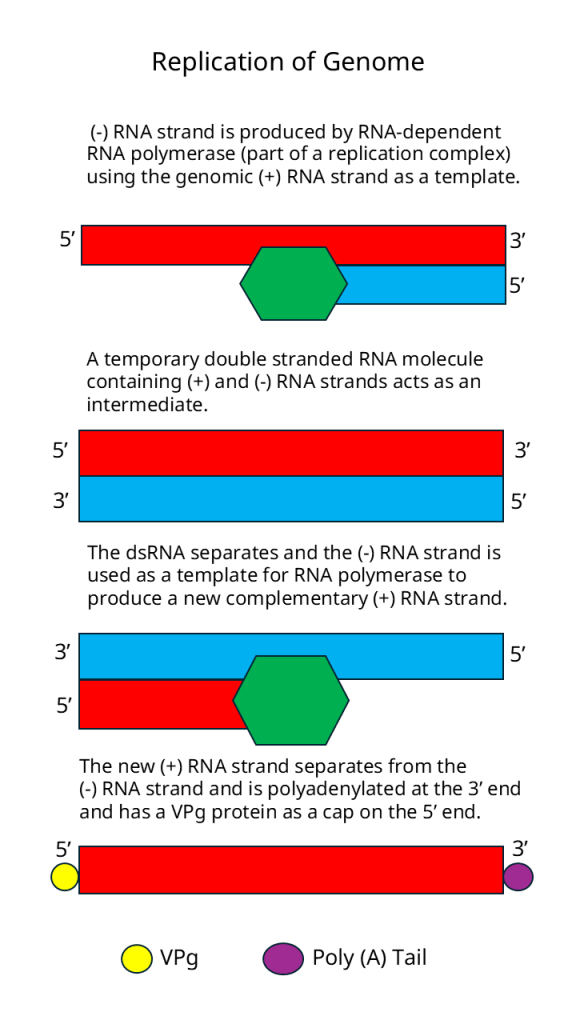
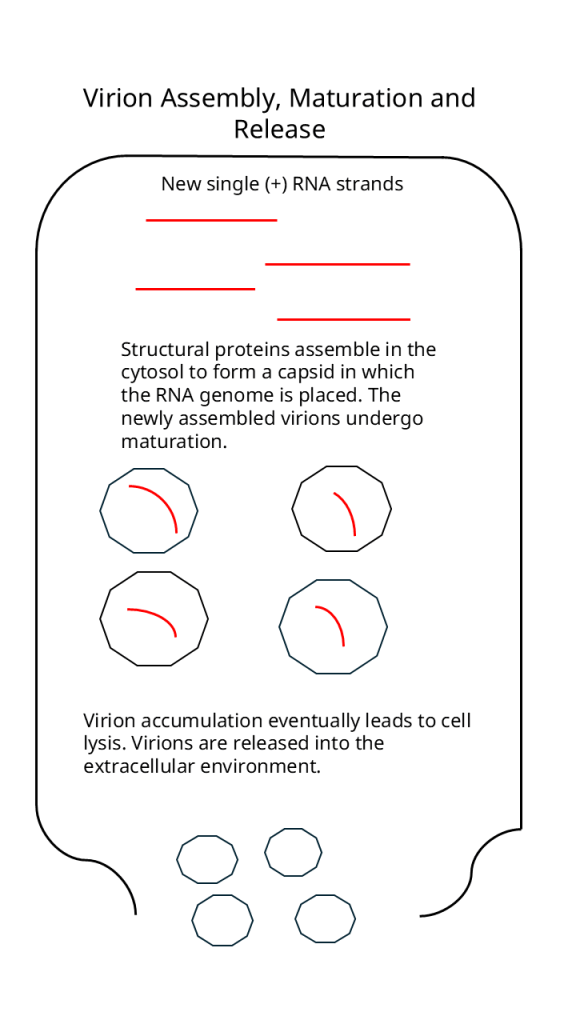
The new positive RNA strands function as genomes for new rhinovirus virions after structural proteins are assembled and form a capsid around each strand. The new virions will then mature and accumulate in the cytosol until the host cell lysis, releasing the virions to infect other cells or exit the host’s body within respiratory droplets for transmission to a new host.