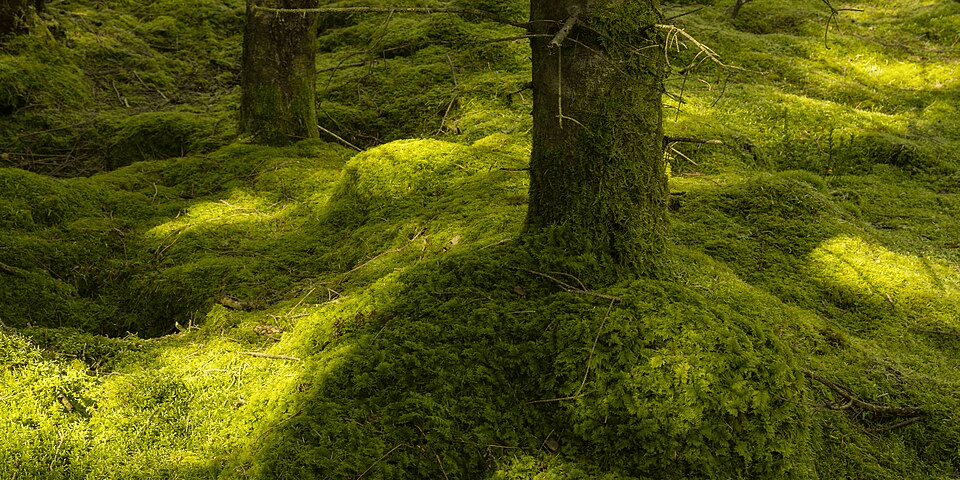
Ordinary Moss or Rough-stalked Feather Moss are the common names for the bryophyte Brachythecium rutabulum, which can be observed throughout the year in the UK and the rest of Europe. It is primarily located on lowland areas such as woodland habitats, hedgerows and even on lawns, although its less common at higher altitudes, particularly in more acidic habitats.
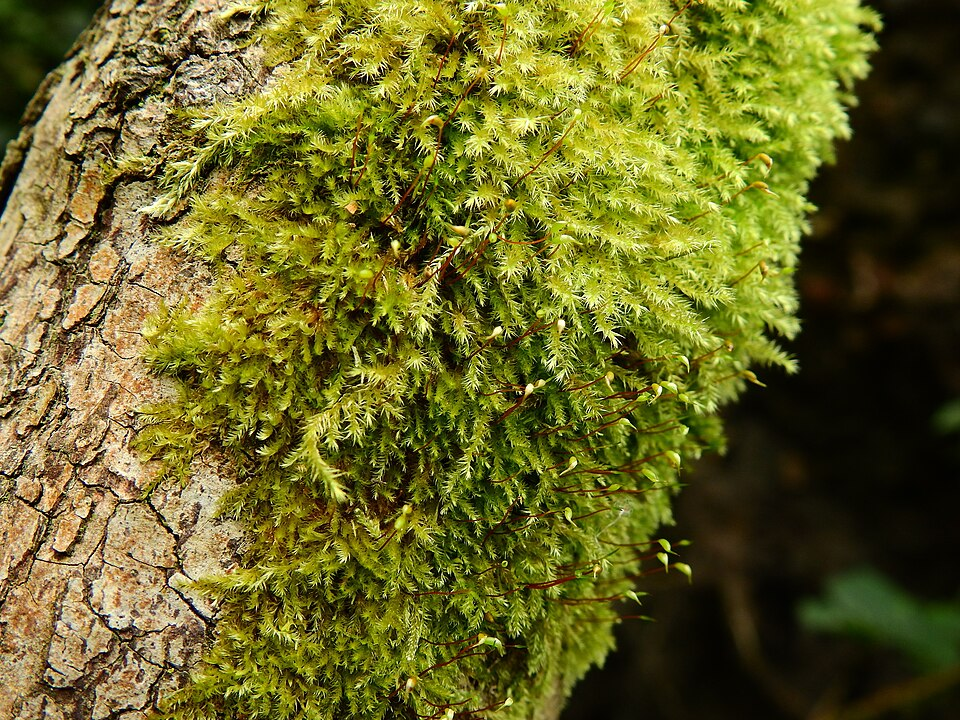
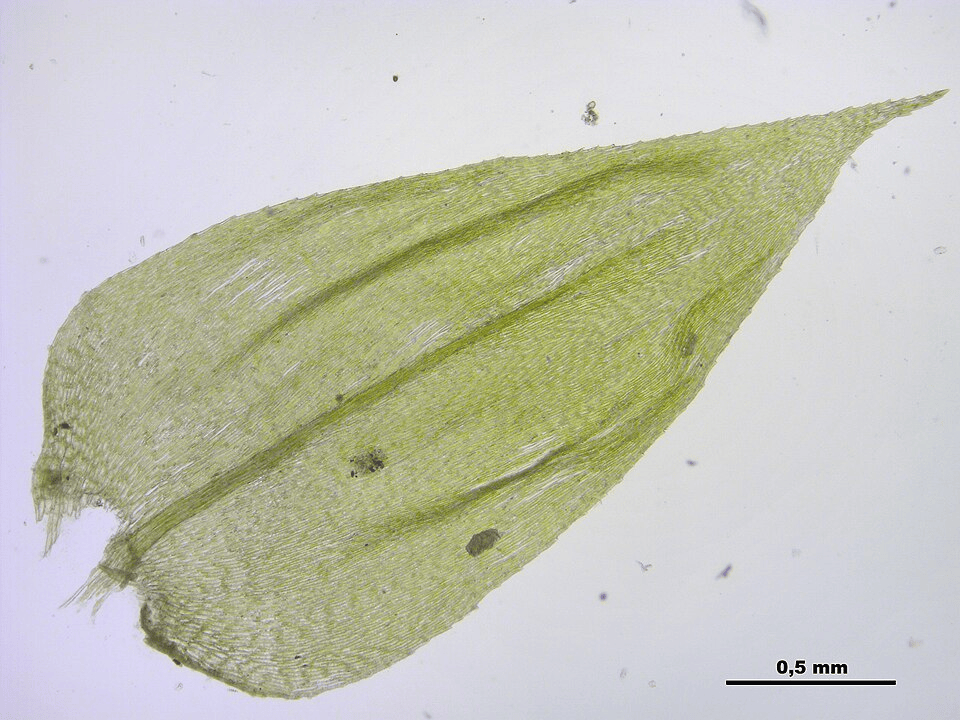
The dominant phase of the life cycle and the one we’re most likely to observe, is the mature haploid gametophyte. The species is pleurocarpous meaning the stems and branches of mature gametophytes tend to have a horizontally tangled arrangement, creating an irregular, carpet-like structure. The colour is usually dark green or green with a slight yellow tinge, often with a glossy sheen. The non-vascular leaf-like structures on the stems and branches are typically triangular ovate or lanceolate in shape with an acuminate or acute tip, some with a plain, smooth margin while others may have a finely tooth-like margin. Due to the absence of vascular tissue, the structures referred to as stems and leaves in mosses are not the same as the structures you see in angiosperms for instance, however for simplicity it is generally accepted that the terms can be used for the corresponding structures in mosses.
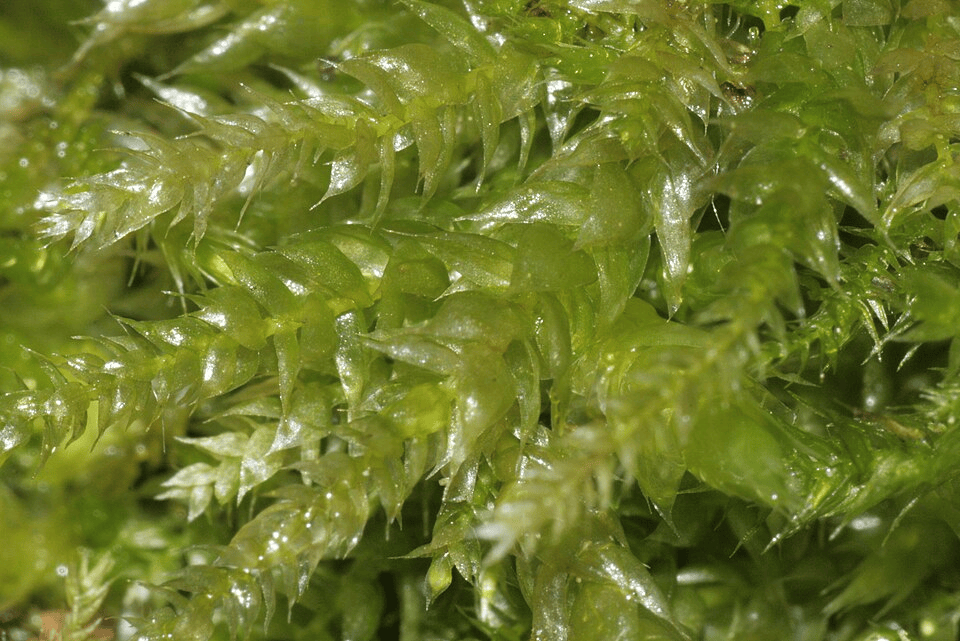
Nutrients and water are absorbed via the leaves and stems which are composed of cells that contain chlorophyll that also facilitate photosynthesis. The presence of multicellular filament-based rhizoids allows the moss to anchor to substrates such as on living or fallen trees within woodland. However, the absence of a true root system means the moss can usually be easily removed from the substrate.
Reproduction usually occurs sexually, beginning with fertilisation facilitated via specialised structures within gametophytes called gametophores. At the end of each gametophore there are either male or female organs (termed gametangia) which produce gametes. The male organs – termed antheridia – produce many sperm (male gametes), whereas the female organs – termed archegonia – each only produce a single egg (female gamete) at the bottom of a structure termed the venter. The sperm is reliant on water for transportation via flagella orchestrated motility from an antheridium to an archegonium where it swims down the venter towards the egg in response to the archegonium releasing chemical substances that attract its movement (an example of chemotaxis). The fertilised egg develops into a zygote within the venter before developing into a diploid embryo via mitosis, which in-turn develops into a diploid structure called a sporophyte which has a brown egg-like sporangium, also termed a capsule. This capsule is on the end of a stalk-like structure called a seta which has a rough texture.
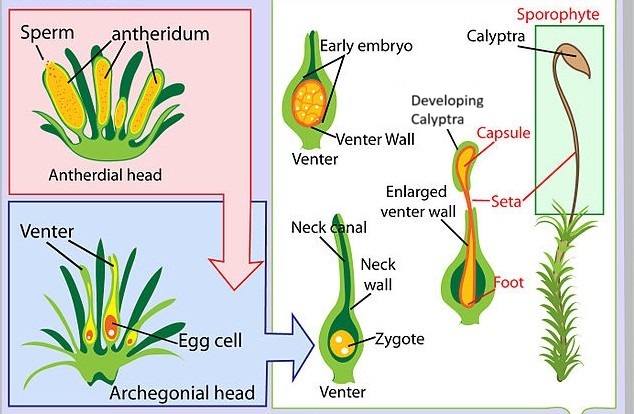
Within the sporophyte there are cells termed mother cells which produce haploid spores via meiosis which are released into the environment and germinate to initially form threadlike structures called protonemata. These structures develop bud-like structures which undergo mitosis to develop into gametophores. A protonema and emerging gametophores constitute a young gametophyte which eventually matures into a mature gametophyte.
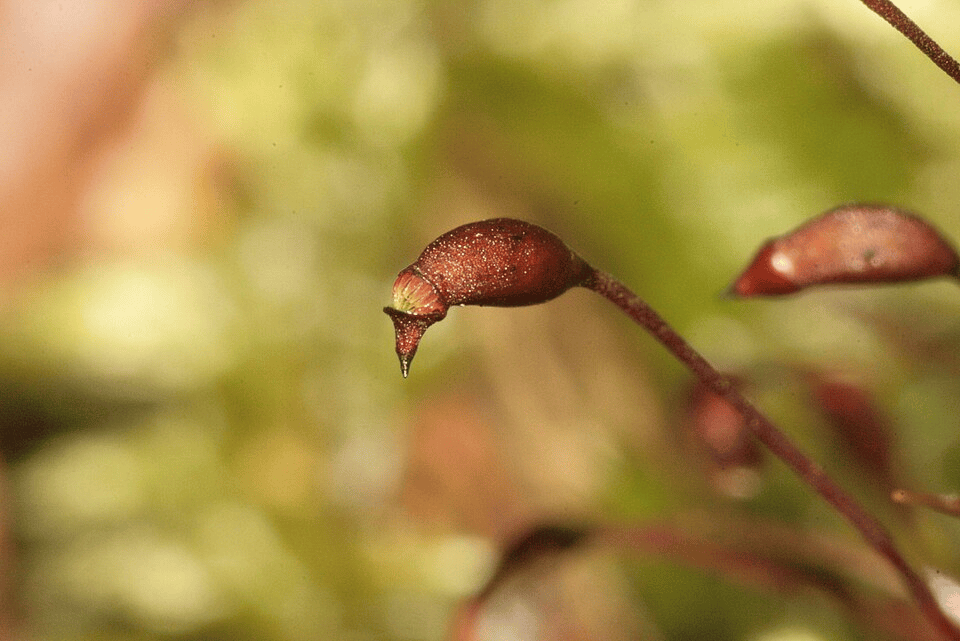
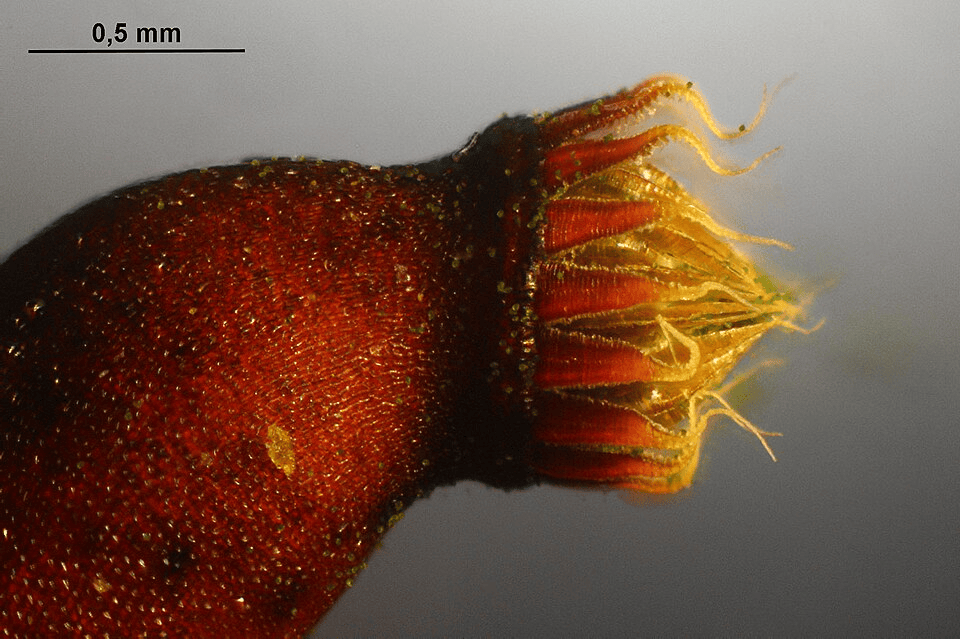
The teeth-like projections on the capsule of the sporophyte are the components of the peristome, a structure that acts as a sort of safety door that opens and closes depending on ambient moisture levels, to ensure spores are released into conditions that favour germination. The distribution of the spores is also aided by the build up of pressure within the capsule which upon opening usually allows the spores to be fired into the air with enough force to cover a suitable distance. Additional structures on the capsule including the calyptra and the operculum provide extra protection for the developing spores until they are released.
Like other bryophytes, Ordinary Moss is capable of asexual reproduction which may require less energy and resources compared with sexual reproduction; although, it usually produces a genetically identical offspring, and a lack of genetic diversity could be an issue when it comes to adapting to changes in the environment.
However, it could be argued that Brachythecium rutabulum has already demonstrated its adaptability. Its diploid structure, the sporophyte, on the otherwise haploid structure of a mature gametophyte, coupled with the use of meiosis and mitosis within its life cycle, and structures that encourage efficient spore production and distribution, could all be viewed as adaptations that have allowed it to not only survive since it first evolved approximately 460 million years ago, but thrive. Perhaps its not so ordinary after all.
 Science and Joe